

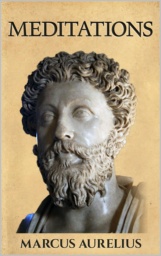
Meditations (2002)
by Marcus Aurelius
11. You could leave life right now. Let that determine what you do and say and think. If the gods exist, then to abandon human beings is not frightening; the gods would never subject you to harm. And if they don't exist, or don't care what happens to us, what would be the point of living in a world without gods or Providence? But they do exist, they do care what happens to us, and everything a person needs to avoid real harm they have placed within him. If there were anything harmful on the other side of death, they would have made sure that the ability to avoid it was within you. If it doesn't harm your character, how can it harm your life? Nature would not have overlooked such dangers through failing to recognize them, or because it saw them but was powerless to prevent or correct them. Nor would it ever, through inability or incompetence, make such a mistake as to let good and bad things happen indiscriminately to good and bad alike. But death and life, success and failure, pain and pleasure, wealth and poverty, all these happen to good and bad alike, and they are neither noble nor shameful -- and hence neither good nor bad. 12. The speed with which all of them vanish -- the objects in the world, and the memory of them in time. And the real nature of the things our senses experience, especially those that entice us with pleasure or frighten us with pain or are loudly trumpeted by pride. To understand those things -- how stupid, contemptible, grimy, decaying, and dead they are -- that's what our intellectual powers are for. And to understand what those people really amount to, whose opinions and voices constitute fame. And what dying is -- and that if you look at it in the abstract and break down your imaginary ideas of it by logical analysis, you realize that it's nothing but a process of nature, which only children can be afraid of. (And not only a process of nature but a necessary one.) And how man grasps God, with what part of himself he does so, and how that part is conditioned when he does. 13. Nothing is more pathetic than people who run around in circles, "delving into the things that lie beneath" and conducting investigations into the souls of the people around them, never realizing that all you have to do is to be attentive to the power inside you and worship it sincerely. To worship it is to keep it from being muddied with turmoil and becoming aimless and dissatisfied with nature -- divine and human. What is divine deserves our respect because it is good; what is human deserves our affection because it is like us. And our pity too, sometimes, for its inability to tell good from bad -- as terrible a blindness as the kind that can't tell white from black.🏁
Global Leaderboard
| # | Player | Time | Duration | Accuracy | WPM | pp | ||
|---|---|---|---|---|---|---|---|---|
| 1 | ||||||||
| 2 | ||||||||
| 3 | ||||||||
| 4 | ||||||||
| 5 | ||||||||
| 6 | ||||||||
| 7 | ||||||||
| 8 | ||||||||
| 9 | ||||||||
| 10 |
11. You could leave life right now. Let that determine what you do and say and think. If the gods exist, then to abandon human beings is not frightening; the gods would never subject you to harm. And if they don't exist, or don't care what happens to us, what would be the point of living in a world without gods or Providence? But they do exist, they do care what happens to us, and everything a person needs to avoid real harm they have placed within him. If there were anything harmful on the other side of death, they would have made sure that the ability to avoid it was within you. If it doesn't harm your character, how can it harm your life? Nature would not have overlooked such dangers through failing to recognize them, or because it saw them but was powerless to prevent or correct them. Nor would it ever, through inability or incompetence, make such a mistake as to let good and bad things happen indiscriminately to good and bad alike. But death and life, success and failure, pain and pleasure, wealth and poverty, all these happen to good and bad alike, and they are neither noble nor shameful -- and hence neither good nor bad. 12. The speed with which all of them vanish -- the objects in the world, and the memory of them in time. And the real nature of the things our senses experience, especially those that entice us with pleasure or frighten us with pain or are loudly trumpeted by pride. To understand those things -- how stupid, contemptible, grimy, decaying, and dead they are -- that's what our intellectual powers are for. And to understand what those people really amount to, whose opinions and voices constitute fame. And what dying is -- and that if you look at it in the abstract and break down your imaginary ideas of it by logical analysis, you realize that it's nothing but a process of nature, which only children can be afraid of. (And not only a process of nature but a necessary one.) And how man grasps God, with what part of himself he does so, and how that part is conditioned when he does. 13. Nothing is more pathetic than people who run around in circles, "delving into the things that lie beneath" and conducting investigations into the souls of the people around them, never realizing that all you have to do is to be attentive to the power inside you and worship it sincerely. To worship it is to keep it from being muddied with turmoil and becoming aimless and dissatisfied with nature -- divine and human. What is divine deserves our respect because it is good; what is human deserves our affection because it is like us. And our pity too, sometimes, for its inability to tell good from bad -- as terrible a blindness as the kind that can't tell white from black.🏁