

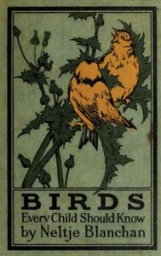
Birds Every Child Should Know (1907)
by Neltje Blanchan
The thrasher has been called a ground "thrush" because it so often chooses to place its nest at the roots of tall weeds in an open field; but a low bush frequently suits it quite as well. Its bulky nest is not a very choice piece of architecture. Twigs, leaves, vine tendrils, and bits of bark form its walls, and the speckled, greenish blue eggs within are usually laid upon a lining of fine black rootlets.🏁
Global Leaderboard
| # | Player | Time | Duration | Accuracy | WPM | pp | ||
|---|---|---|---|---|---|---|---|---|
| 1 | ||||||||
| 2 | ||||||||
| 3 | ||||||||
| 4 | ||||||||
| 5 | ||||||||
| 6 | ||||||||
| 7 | ||||||||
| 8 | ||||||||
| 9 | ||||||||
| 10 |
The thrasher has been called a ground "thrush" because it so often chooses to place its nest at the roots of tall weeds in an open field; but a low bush frequently suits it quite as well. Its bulky nest is not a very choice piece of architecture. Twigs, leaves, vine tendrils, and bits of bark form its walls, and the speckled, greenish blue eggs within are usually laid upon a lining of fine black rootlets.🏁